Kindly take note of the below as received from SAAFF.
An urgent, consolidated update on the critical operational situation at the Durban Gateway Terminal (DGT / Pier 2). The position remains serious and is affecting cargo across the supply chain right now. This note requires no specific response – we simply want to keep you fully informed.
How we got here
- The situation at DGT has deteriorated materially. Pressure had already been building from around 7 August, before the NAVIS N4 system cutover, and the migration then compounded existing yard, equipment, booking and landside-evacuation constraints.
- Member evidence includes containers left stacked without usable bookings, and individual moves taking 12–18 hours in some instances.
- The immediate issue is therefore not NAVIS alone – it is restoring fluidity across the entire terminal system.
Current position at a glance
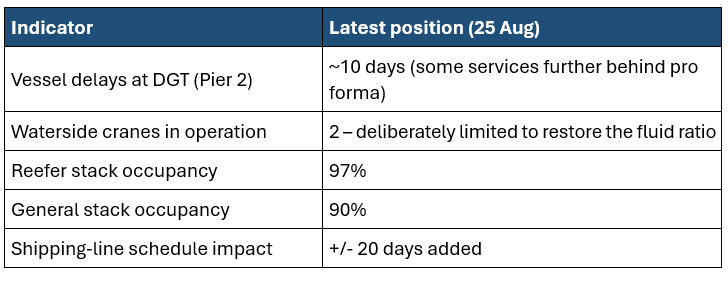
What SAAFF is doing – urgently
- We have engaged DGT, ICTSI and senior Transnet leadership continuously, backed by actual transporter and container data and direct member feedback.
- We are holding discussions with major transporters, have engaged the shipping lines, requested relief on storage and demurrage, and pushed for clearer, verified operational communication.
- As conditions worsened, we escalated the matter to the Presidency, supported by empirical evidence and a detailed set of practical interventions. The Presidency engaged with DGT on Friday 21 August, and we continue to press for an integrated recovery rather than isolated terminal interventions.
The immediate priority
- Restore booking and evacuation capacity, rehabilitate the stacks, and bring additional equipment and operational capability into the system.
- Use Pier 1 and the Multi-Purpose Terminal capacity where practicable and strengthen rail evacuation.
- Where necessary, temporarily moderate waterside inflows to let the landside system reset and restore the fluid ratio – getting import containers out of the terminal as fast as possible, restoring yard fluidity and progressively reopening export stack capacity.
- The shared industry view, including the shipping lines, is that the terminal now needs room to recover rather than more pressure; two shipping lines have already held vessels back to create breathing space.
- We are monitoring the Group Import Release process, where there is some movement, though this remains constrained by equipment.
Make no mistake – the impact is severe and mounting: escalating costs, the risk of cargo loss, disrupted manufacturing schedules (several supply chains have already reported serious disruption), and time-critical hazardous, medical and export cargo all under threat. Pier 2 is our largest container terminal, and restoring its fluidity is our highest priority. We are pushing hard for the fastest possible recovery and will keep you updated as the situation develops.